
The Psychology of Flavor Switching: Why Users Keep Changing TEREA Flavors
Why TEREA users keep switching flavors. Discover the psychology behind dopamine, habit loops, novelty seeking, and flavor fatigue explained simply.

On this page · 13 sections
- The Brain Science Behind TEREA Flavor Decisions
- Flavor Fatigue: When the Same Taste Goes Flat
- Novelty Seeking and the Discovery Drive
- Habit Loops and Routine Disruption
- Emotional and Environmental Triggers in the UAE
- The Palate Reset Effect — Why Breaks Make Flavors Taste Better
- TEREA Flavor Profiles: What Each Type Offers
- The Four TEREA Flavor Switching Personalities
- Practical Flavor Rotation Guide for UAE Users
- Common Mistakes UAE Users Make When Switching Flavors
- Is TEREA Flavor Switching Normal? Yes — Here Is Why
- Final Thoughts: Switching Is a Feature, Not a Bug
- Frequently Asked Questions
Quick Answer: TEREA users in the UAE keep switching flavors because of a natural brain process called sensory-specific satiety — the same taste stops feeling as satisfying after repeated use. Combined with dopamine-driven novelty seeking, mood changes, UAE’s hot climate, and the wide variety of IQOS TEREA flavors available, flavor rotation is completely normal — not a sign of dissatisfaction.
In Dubai, Abu Dhabi, and across the UAE, IQOS TEREA users rarely stick to a single flavor for long. A user might spend a week on a warm, smooth tobacco profile in a Dubai Marina café, switch to a cooling menthol mid-week during work breaks, and quietly return to their original choice a few days later — without fully understanding why.
What looks like inconsistency is actually a predictable product of how the human brain manages sensory experience, novelty, reward, and emotional state. In a fast-paced, high-stimulation environment like the UAE — where heat, lifestyle shifts, and social culture are constantly in motion — these effects are especially visible among adult tobacco product users.
This guide explains the real psychological and sensory science behind TEREA flavor switching, helps you understand your own flavor patterns, and gives you a practical framework for choosing and rotating TEREA flavors with intention — whether you are new to TEREA SMARTCORE STICKS or a long-term IQOS ILUMA user.
The Brain Science Behind TEREA Flavor Decisions
Dopamine and the Novelty Reward Loop
Every time you try a new TEREA flavor, your brain activates a dopamine-linked reward response — the same mechanism behind trying a new restaurant or discovering a new product. The key insight is that the brain rewards newness more reliably than it rewards repetition.
When you switch from a smooth tobacco profile like TEREA Amber to a richer option like TEREA Bronze, the brain anticipates a new experience before you even take the first puff. That anticipation itself produces a mild dopamine spike — making the first few uses of any new flavor feel noticeably more satisfying than the same flavor used repeatedly.
In UAE cities like Dubai, where people are constantly surrounded by new cafés, luxury experiences, and seasonal trends, the brain becomes especially primed for novelty. Flavor discovery slots naturally into this broader pattern of experience-seeking behavior.
Sensory-Specific Satiety: Why Your Favorite Flavor Stops Feeling “Enough”
Sensory-specific satiety is the brain’s built-in system for reducing interest in a repeated sensory input. The more you experience the same taste, the less intensely your brain responds to it — even if nothing about the product has changed.
This is why a flavor like TEREA Amber that felt perfectly satisfying in week one can feel “flat” or “weak” by week four, even though the stick itself is identical. The flavor hasn’t degraded — your perception of it has adapted.
💡 Common UAE user concern: “My TEREA doesn’t taste as strong anymore.” In most cases, this is not a product quality issue. It is a normal sensory adaptation that resolves with a short flavor break or rotation.
Even with premium IQOS ILUMA devices using the SMARTCORE INDUCTION SYSTEM — which delivers consistent, blade-free heating — flavor fatigue still appears. The device performs correctly; the adaptation happens entirely in the user’s perception, not the product.
Flavor Fatigue: When the Same Taste Goes Flat
Flavor fatigue is the point at which repeated sensory exposure causes the enjoyment curve to flatten. What was once a satisfying ritual starts to feel predictable and underwhelming.
Signs you may be experiencing flavor fatigue:
- Your usual flavor feels less intense than it did weeks ago
- You find yourself needing more sessions to feel satisfied
- A flavor you enjoyed now feels bland or one-dimensional
- You keep reaching for a second opinion by trying a different pack
In the UAE’s warm climate — where heat, humidity, and a fast-paced environment naturally increase sensory load — olfactory adaptation can feel faster than in cooler countries. This is why many experienced UAE users report switching flavors seasonally or even weekly without consciously planning to.
Flavor fatigue is temporary. A short break from a flavor — even two or three days — is usually enough to reset perception. Many long-term users describe returning to a flavor they had set aside and finding it “tastes better than it ever did.”
Novelty Seeking and the Discovery Drive
Human beings are biologically drawn to novelty. In a modern consumer context, this evolutionary trait translates directly into product experimentation. TEREA flavor switching driven by novelty looks like this: the user is not dissatisfied — there is no problem to solve. The motivation is pure curiosity: “what if this one is even better?”
That “what if” is a powerful force, and the wide variety of regional TEREA editions makes exploration very easy. In the UAE retail environment, TEREA Indonesia, TEREA Kazakhstan, and TEREA Switzerland flavors are all widely available — each with its own distinct character and intensity profile. The breadth of the range naturally encourages experimentation.
“Users are not always chasing a better taste. Often, they are chasing the feeling of discovery itself.”
Habit Loops and Routine Disruption
Behavioral psychology describes most daily consumption habits as a three-part loop:
- Cue — A trigger such as stress, a work break, or a social moment
- Routine — Using a TEREA SMARTCORE STICK with your IQOS ILUMA device
- Reward — Relaxation, focus, or satisfaction
At first, this loop feels emotionally rewarding. But over time, the brain learns to predict the outcome — and once the reward becomes predictable, the emotional impact reduces. The experience doesn’t become bad, it becomes automatic. And automatic means less noticed.
Switching flavors is one of the simplest ways users unconsciously disrupt this loop. A different flavor reintroduces a small element of unpredictability — enough to restore attention and re-engage the reward response. In behavioral psychology, this is known as a micro-disruption: a tiny variable change that reactivates engagement in a routine.
This is why many users naturally rotate between origins like TEREA Indonesia and TEREA Kazakhstan — the difference in intensity and character is enough to reset the habit loop without abandoning the overall routine.
Emotional and Environmental Triggers in the UAE
Flavor switching is rarely a purely logical decision. It is shaped heavily by emotional state, social environment, and physical context — all of which change frequently in UAE daily life.
Stress and Focus Scenarios
During high-stress moments — a demanding workday, a deadline, or a long commute — users tend to reach for richer, more grounding tobacco profiles. TEREA Amber or deeper tobacco blends from the Kazakhstan range often fit this role, providing a sense of stability that matches the emotional need for something solid and familiar.
Social and Relaxation Settings
In relaxed social settings — a café, a friend’s gathering, or an evening outdoors — users often prefer lighter, fresher options. Menthol and cooling blends like TEREA Turquoise or TEREA Purple Wave feel more appropriate in these contexts — less intense, more convivial.
UAE Climate and Seasonal Preference
The UAE’s extreme heat — summer temperatures regularly exceeding 40°C — has a direct effect on flavor preference. Menthol and cooling sensations feel noticeably more satisfying in hot weather, creating a natural seasonal shift toward fresh profiles. During cooler months, many users shift back toward warmer tobacco-forward flavors. Pearl variants such as TEREA Sun Pearl and TEREA Oasis Pearl sit in a comfortable middle ground — smooth enough for everyday use, with enough nuance to feel like an intentional choice year-round.
Social Influence in UAE Culture
In Dubai and Abu Dhabi, social environments have a measurable influence on product choices. Seeing peers try a different regional edition, hearing a recommendation in a group setting, or noticing a new pack design all contribute to switching decisions — the same social learning behavior that governs preferences in food, fashion, and fragrance.
The Palate Reset Effect — Why Breaks Make Flavors Taste Better
One of the most practical and predictable patterns in TEREA user behavior is the palate reset effect. When a user stops using a particular flavor for even a short period — sometimes just 48 to 72 hours — several things happen:
- Sensory fatigue fades as olfactory adaptation reverses
- Emotional memory of the flavor becomes more positive without daily repetition dulling it
- The taste registers as fresh and more defined upon return
This is why experienced users describe a flavor they had set aside as tasting “better than I remembered.” The flavor hasn’t changed — perception has reset. Many long-term UAE users have unknowingly built a natural two- or three-flavor rotation around this effect, cycling through options without consciously planning it.
TEREA Flavor Profiles: What Each Type Offers
Understanding the broad flavor families within the TEREA range makes switching more intentional — and more satisfying. Here is a practical overview of the main categories available to UAE users:
🟫 Warm Tobacco
Rich, grounding flavors with full tobacco aroma. Best for morning routines, focus sessions, and stress relief.
Examples: TEREA Amber, TEREA Bronze, TEREA Teak
🩶 Smooth & Mild Tobacco
Lighter tobacco with subtle character. Good for users sensitive to intensity or new to heated tobacco sticks.
Examples: TEREA Silver, TEREA Sienna
🩵 Menthol & Cooling
Refreshing cooling sensation with a clean throat hit. Ideal for UAE’s hot weather, post-meal use, or social settings.
Examples: TEREA Turquoise, TEREA Purple Wave, TEREA Menthol
🟡 Fruity & Bright
Light, fresh tobacco with fruity or citrus notes. Appeals to users who want something distinct from classic tobacco.
Examples: TEREA Yellow, TEREA Green Zing
🔵 Pearl & Specialty
Nuanced blends with layered profiles — often light menthol or floral undertones. Good rotation flavors between heavy tobacco and menthol sessions.
Examples: TEREA Oasis Pearl, TEREA Sun Pearl
🌏 Regional Editions
Exclusive profiles from Japan, Indonesia, Kazakhstan, and Switzerland — each with distinct regional intensity and character. Ideal for explorers and intensity chasers.
Examples: Kazakhstan range, Indonesia range
Quick Flavor Comparison by Use Case
| Scenario | Recommended Flavor Type | Example |
|---|---|---|
| Morning routine / Focus | Warm tobacco | TEREA Amber, TEREA Bronze |
| Hot UAE afternoon | Menthol / Cooling | TEREA Turquoise, TEREA Purple Wave |
| Social / Café setting | Smooth mild or pearl | TEREA Oasis Pearl, TEREA Silver |
| Evening relaxation | Rich tobacco or specialty | TEREA Bronze, TEREA Sienna |
| Palate reset / Variety seeking | Regional editions | Indonesia, Kazakhstan ranges |
| New to TEREA / Light preference | Fruity or bright | TEREA Yellow, TEREA Sun Pearl |
The Four TEREA Flavor Switching Personalities
Over time, clear behavioral patterns emerge among users. Most people fit broadly into one of four profiles — though many shift between them depending on lifestyle and environment.
| Personality | Behavior | Best Approach |
|---|---|---|
| The Explorer | Always curious; tries every new release and regional edition; variety is the main motivation | Keep a rotating selection of 3–4 flavor families; try Indonesia and Kazakhstan ranges for variety |
| The Comfort Seeker | Experiments occasionally but always returns to a core favorite; stability matters more than novelty | Keep one primary flavor stocked; allow one rotation flavor for mood days |
| The Intensity Chaser | Focused on strength and throat hit; switches until the right satisfaction level is found | Explore stronger profiles in the Kazakhstan collection; compare Bronze and Amber directly |
| The Routine Rotator | Has a fixed set of 2–3 flavors and cycles through them predictably based on mood or time of day | Build a morning / afternoon / evening rotation using different flavor families to match sensory needs |
Practical Flavor Rotation Guide for UAE Users
Understanding your own switching patterns is the first step to making flavor exploration more intentional and satisfying. Here is a practical framework used by experienced TEREA users across Dubai and Abu Dhabi:
Build Your Personal Flavor Rotation
- Choose one anchor flavor — your primary daily tobacco. It should feel dependable and consistent.
- Add one contrast flavor — a menthol or lighter profile for hot afternoons, post-meal moments, or social settings.
- Keep one exploration slot — a regional edition or new flavor to satisfy curiosity without disrupting your core routine.
- When your anchor flavor starts to feel flat, switch to your contrast flavor for 3–5 days before returning. This palate reset usually restores full satisfaction.
- Track which situations drive your switching: stress? Heat? Social context? Recognizing the trigger helps you choose intentionally rather than reactively.
Explore All TEREA Flavors Available in the UAE
From smooth tobacco to refreshing menthol and regional editions — find your next rotation flavor with same-day delivery across Dubai and Abu Dhabi.
Common Mistakes UAE Users Make When Switching Flavors
- Switching too quickly after first use. Give any new flavor at least 3–5 sticks before evaluating. First impressions are often shaped by expectation, not the actual taste profile.
- Assuming weaker flavor means a faulty product. In most cases, reduced intensity after extended use is sensory adaptation, not a product defect. A short break usually resolves it completely.
- Buying too many flavors at once. Having six or more options at a time increases confusion and reduces satisfaction with any single flavor. A focused rotation of 2–3 works better for most users.
- Using HEETS sticks in an ILUMA device. TEREA SMARTCORE STICKS are specifically designed for IQOS ILUMA’s induction-based heating system. Using HEETS — designed for older blade-based IQOS models — is not compatible and affects both flavor quality and device performance.
- Ignoring regional intensity differences. Kazakhstan flavors tend to be noticeably more intense than international or Swiss range editions. New users should start with standard international flavors before exploring stronger regional editions.
Is TEREA Flavor Switching Normal? Yes — Here Is Why
Flavor switching is not a sign of indecision, dissatisfaction, or product problems. It is a predictable expression of normal sensory psychology — the same behavior visible in every sensory consumption category: coffee drinkers rotate blends, fragrance users maintain a perfume rotation, food preferences shift with season and mood.
In a diverse, high-stimulation environment like the UAE — where lifestyle variety is built into daily culture — this behavior is especially visible. The wide availability of regional TEREA editions, from Indonesia and Kazakhstan to Switzerland, means that exploration is easy — and for many users, that variety is part of what makes the experience genuinely enjoyable.
Final Thoughts: Switching Is a Feature, Not a Bug
TEREA flavor switching is not confusion. It is the brain’s natural response to repetition, novelty, and emotional context — working exactly as designed. Dopamine-driven reward loops, sensory-specific satiety, habit disruption, mood influence, and the UAE’s own climate and culture all contribute to a behavior that is as normal as it is universal.
The most satisfied TEREA users in Dubai and Abu Dhabi are not those who rigidly stick to one flavor or those who try everything with no pattern. They are the ones who understand their own switching triggers, build a small intentional rotation, and allow themselves the flexibility of a palate reset when needed.
If you are still exploring your preferences, the full TEREA flavor collection is available with same-day delivery across Dubai and Abu Dhabi — making it straightforward to build the rotation that fits your lifestyle.
Frequently Asked Questions
Why do I keep switching TEREA flavors even when I have a favorite?
Even users with a clear favorite switch regularly due to sensory-specific satiety — the brain’s natural reduction of response to repeated input. Your favorite flavor remains the same product; your perception of it temporarily adapts. A short break or a contrast flavor for a few days typically resets it and restores the original experience.
Why does my TEREA flavor taste weaker after using it for weeks?
This is flavor fatigue — a well-understood sensory adaptation where repeated exposure to the same taste causes the brain to reduce its response intensity. The product has not changed. Taking 2–3 days away from the flavor and using an alternative during that time is usually enough to fully restore the original experience.
Which TEREA flavors are best for UAE’s hot weather?
Menthol and cooling profiles are the most popular choices during UAE summer months. TEREA Turquoise, TEREA Purple Wave, and TEREA Oasis Pearl are consistent favorites among users who want a refreshing cooling sensation in high temperatures. Pearl flavors offer a year-round middle-ground option that works across seasons.
Is it normal to use different TEREA flavors at different times of day?
Yes, and it is a very common pattern. Many UAE users maintain a morning tobacco profile — warmer and richer — and an afternoon or evening menthol or lighter choice. This two-flavor routine matches natural mood and energy shifts across the day and is an effective way to reduce flavor fatigue while maintaining overall satisfaction.
Are TEREA Kazakhstan flavors stronger than international editions?
Generally, yes. The TEREA Kazakhstan range is known for a more intense flavor profile and stronger throat hit compared to international or Swiss editions. Users who prefer mild flavors or are new to heated tobacco products are advised to start with standard editions before exploring regional ranges.
How many TEREA flavors should I rotate between?
Most experienced users find a rotation of 2–3 flavors works well. More than four or five options at once can make it harder to appreciate any single flavor. A practical approach: one primary daily anchor flavor, one contrast flavor from a different family, and one occasional exploration choice for variety.
Do emotions really affect which TEREA flavor I choose?
Yes, significantly. Mood, stress levels, and social context all influence flavor preference. Warmer, richer tobacco profiles tend to feel more grounding during high-stress moments. Lighter, menthol, or fresh flavors tend to feel more appropriate during relaxed, social, or outdoor settings.
Why does a flavor taste better after taking a break from it?
A short break allows the palate reset effect to occur — sensory fatigue fades, olfactory adaptation reverses, and positive emotional memory of the flavor is restored. Even 48–72 hours away from a specific flavor is often enough to make it feel noticeably fresher and more satisfying upon return.
Can I use HEETS sticks in my IQOS ILUMA device?
No. IQOS ILUMA devices use an induction-based SMARTCORE INDUCTION SYSTEM that is only compatible with TEREA SMARTCORE STICKS. HEETS are designed for older IQOS models with a heating blade and are not compatible with ILUMA. Using incompatible sticks may damage the device and will produce poor flavor results.
Where can I buy original TEREA sticks in Dubai and Abu Dhabi?
You can order authentic TEREA sticks from Terea Heets Dubai with same-day delivery across Dubai, Abu Dhabi, Sharjah, and other UAE emirates. The store carries the full range including international, Japan, Indonesia, Kazakhstan, and Switzerland editions.
Writes for Terea Heets Dubai. About our editorial team
 TEREA Kyrgyzstan Edition Explained: Meaning and Flavors for UAE Users
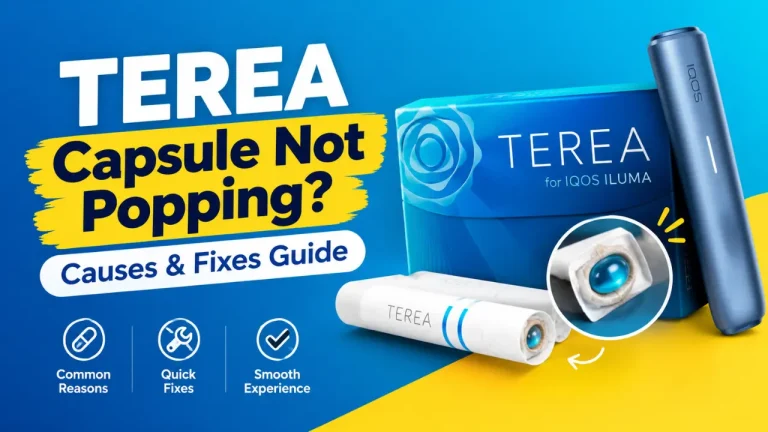 IQOS TEREA Capsule Not Popping? Reasons and Easy Fixes Guide for UAE Vapers
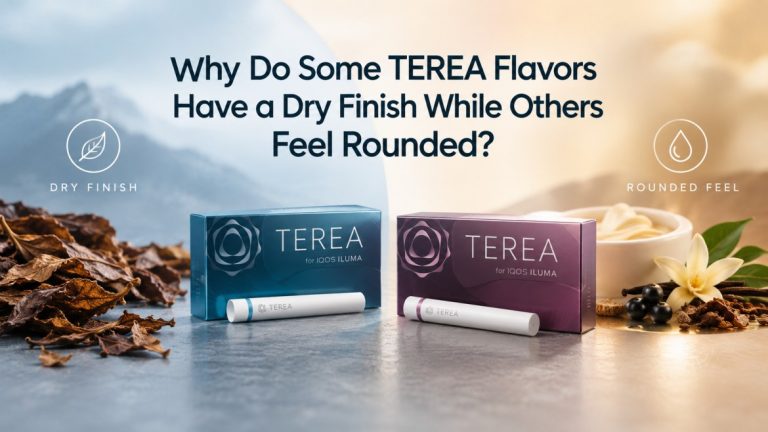 Why Do Some TEREA Flavors Have a Dry Finish While Others Feel Rounded?
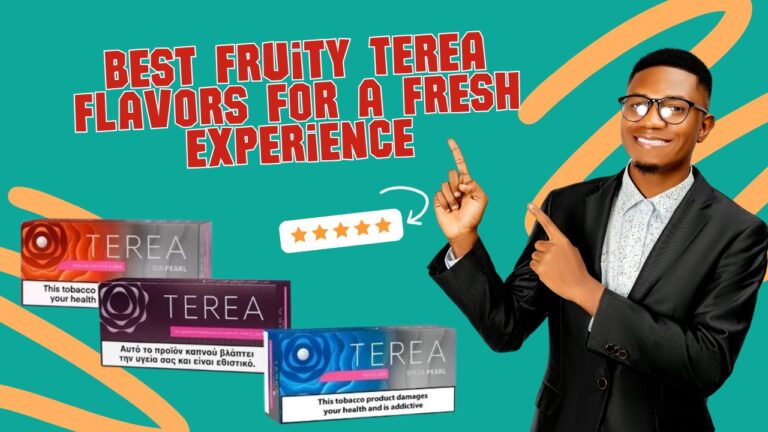 Best Fruity TEREA Flavors for a Fresh Experience
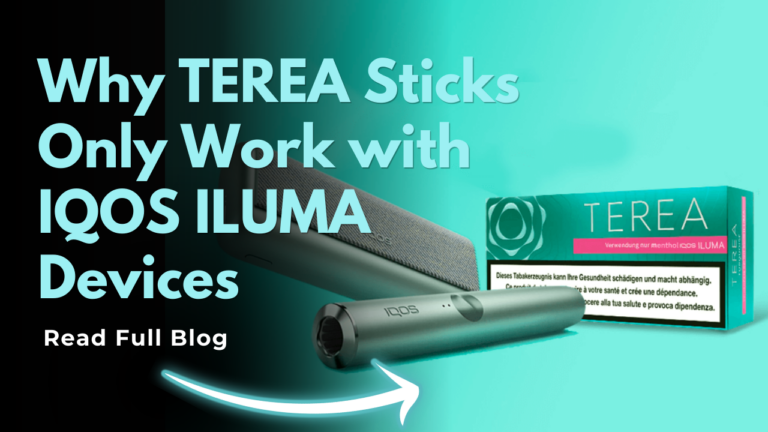 Why TEREA Sticks Only Work with IQOS ILUMA Devices
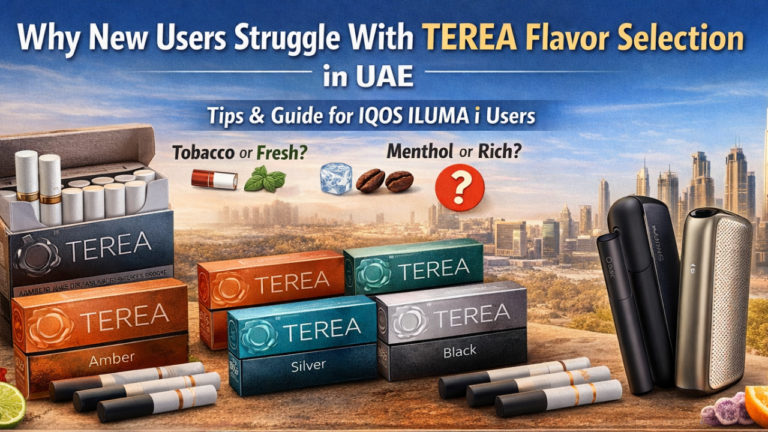 Why New Users Struggle With TEREA Flavor Selection in UAE